
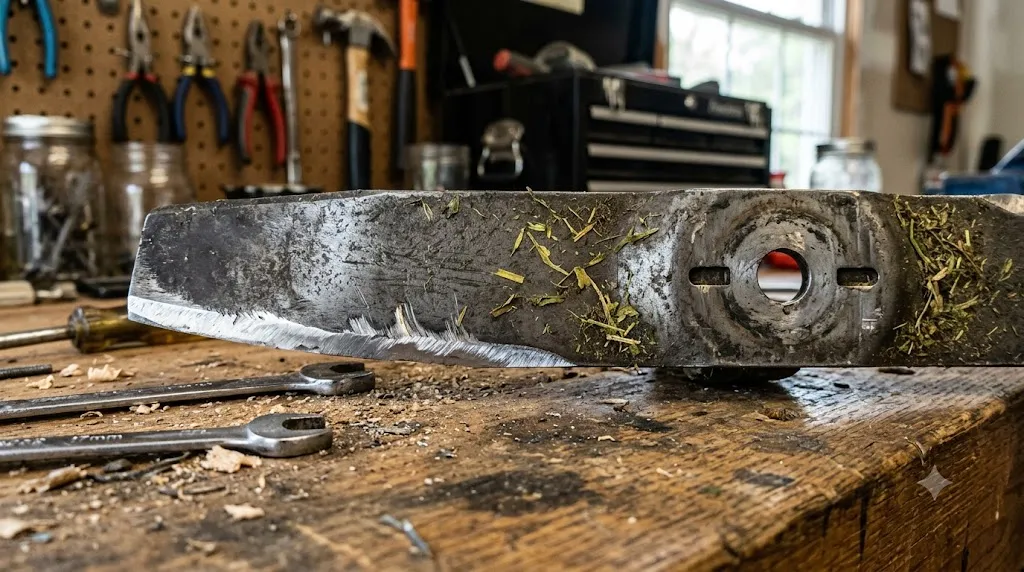
Short answer: To sharpen lawn mower blades safely, isolate the machine completely, remove and inspect the blade, restore the original cutting bevel with a file or grinder, balance the blade, reinstall it to the manufacturer’s instructions, and test the mower only after the work area is clear. For a remote-control lawn mower, also verify emergency-stop, signal-loss, and restart behavior before returning to production work.
This guide is written for contractors, land-maintenance companies, municipalities, commercial property operators, dealers, and other professional users. It focuses on operator-controlled remote-control mowers, not fully autonomous robotic lawn mowers.
What to prepare before sharpening a mower blade
Choose the right tools and protective equipment
Use a workbench, vise with soft jaws, heavy work gloves, eye protection, hearing protection when grinding, a suitable file or grinder, a blade balancer, and the manufacturer’s service information. Keep a wire brush and cleaning supplies available so you can inspect the blade rather than sharpening over packed grass and soil.
The U.S. Consumer Product Safety Commission recommends heavy gloves when changing, sharpening, or cleaning mower blades. Eye protection is especially important when using a powered grinder or removing hardened debris.
| Method | Main advantage | Main control point | Professional use |
|---|---|---|---|
| Hand file | Excellent control and low heat | Requires more time and consistent strokes | Good for routine touch-ups and final edge work |
| Bench grinder | Fast material removal | Can overheat or change the bevel if used aggressively | Useful for maintenance shops with trained staff |
| Angle grinder | Portable and quick | Greater risk of uneven grinding and excessive metal removal | Use only with proper guarding, control, and operator training |
| Replacement blade | Predictable condition when damage is severe | Must match the exact mower and mounting system | Preferred when the blade is cracked, bent, or excessively worn |
Identify the mower and blade system
Before removing anything, record the mower model, blade position, and the orientation of the cutting edge. Remote-control mowers may use different deck layouts, blade carriers, fasteners, guards, and energy-isolation procedures. Do not assume that instructions for a walk-behind mower, ride-on mower, or autonomous robot mower apply to a remote-control machine.
Confirm the correct replacement part, removal tool, tightening procedure, and blade service instructions in the model manual. If the manual specifies a blade angle, torque value, locking method, or replacement interval, those instructions take priority over general advice.
How to sharpen lawn mower blades safely
Step 1: Park, stop, and isolate the mower
Park on a firm, level surface away from traffic and unauthorized access. Stop the cutting system and propulsion system, switch off the engine or electrical system, remove the key or isolating connector where fitted, and prevent the machine from moving. For an engine-powered machine, follow the manual’s ignition and fuel-isolation procedure; spark-plug disconnection applies only to machines equipped with a spark plug.
Do not rely on the remote controller, an emergency-stop button, or a stopped blade alone. The UK Health and Safety Executive advises isolation before removing blockages or carrying out cleaning, adjustment, and repair work. Wait for all moving parts to stop, and support the deck or machine with approved equipment before working beneath it.
Step 2: Remove the blade and clean it
Wear gloves and use the correct tool to remove the blade fastener. Mark the top side or photograph the assembly before removal so the blade returns in the correct orientation. Clean away grass, soil, and corrosion around the blade, mounting hole, and cutting edge.
Never place your hand under an unsupported deck to locate a blade. If the machine is heavy, elevated, tracked, or difficult to secure, use the service equipment specified by the manufacturer or assign the work to trained maintenance personnel.
Step 3: Inspect before sharpening
Sharpening is appropriate only when the blade is structurally sound. Replace the blade instead of grinding it if you find a crack, significant bend, missing metal, a badly damaged mounting hole, deep deformation, severe corrosion, or a condition that prevents reliable balancing. Do not hammer a bent blade straight and return it to service.
Also inspect the blade carrier, fastener, washers, guards, and nearby deck components. Abnormal vibration, poor cutting, or unusual noise may indicate a damaged blade or another mechanical problem. Resolve that problem before resuming mowing.
Step 4: Restore the original bevel
Clamp the blade securely with the cutting edge accessible. Follow the existing bevel rather than creating a new one by guesswork. With a file, use controlled strokes along the cutting edge in one direction, working from the inner portion toward the tip. Remove only enough metal to restore a continuous, even edge.
With a grinder, use light passes and keep the blade moving so one area does not become overheated. Excessive heat can damage the blade’s temper. Do not grind deeply into the blade, create a sharp hook, or remove substantially more metal from one end than the other. If the bevel is unclear or the blade has already been heavily reshaped, replacement or professional sharpening is safer than trying to correct it by eye.
Step 5: Balance the blade
Balancing is as important as sharpness. Place the blade on a suitable blade balancer or another approved balancing fixture through its center hole. If one side consistently drops, remove a small amount of material from the heavy side and check again. Do not compensate by adding material or bending the blade.
A blade that is sharp but unbalanced can create vibration, accelerate wear, and reduce operator confidence in the machine. For a commercial fleet, record the inspection result and remove any blade that cannot be balanced reliably.
Step 6: Reinstall and perform a controlled test
Install the blade in the correct orientation using the specified hardware and tightening procedure. Confirm that the blade carrier rotates freely where the design allows, that guards are secure, and that no tools or loose parts remain in the deck.
Before cutting vegetation, test the mower in a controlled area with people, animals, vehicles, and unnecessary equipment excluded. Listen for abnormal vibration and stop immediately if the machine behaves differently. Recheck the blade and mounting hardware after the initial test if the manufacturer’s procedure calls for it.
How to make the sharpened blade cut effectively
Keep the edge even, not merely razor-sharp
Effective mower blade sharpening means maintaining the blade’s designed shape, bevel, balance, and structural condition. A thin, fragile edge is not automatically better for commercial mowing. Consistent edge geometry and correct blade installation generally matter more than removing the maximum amount of metal.
Inspect the blade after mowing in abrasive conditions, heavy growth, or areas containing stones, wire, branches, or other debris. The University of Minnesota Extension explains that rotary mower blades can throw objects encountered in the cutting area and recommends clearing debris before mowing. Site inspection protects both the blade and people near the work area.
Use condition-based maintenance
There is no universal sharpening interval for every mower. Frequency depends on the blade design, vegetation, soil, debris, operating hours, and the manufacturer’s maintenance schedule. Inspect the blade before use or at the interval specified for the machine, and sharpen only when the edge is dull or damaged but the blade remains structurally suitable.
For fleet operations, a useful service record includes the machine model, operating hours, blade condition, sharpening method, balance result, fastener inspection, and technician name. This helps managers identify repeated damage from site conditions and plan replacement parts.
Remote-control lawn mower blade service considerations
Remote control does not replace mechanical isolation
A remote-control lawn mower remains an operator-controlled machine: the operator commands movement and cutting from outside the machine, but the blades, drive system, engine, battery, hydraulics, and stored mechanical energy still require physical isolation during service.
Before blade work, confirm the model-specific shutdown sequence and prevent both unintended movement and unintended restart. Keep the transmitter secured so another person cannot activate it during maintenance. If the mower uses hydraulic, electrical, or battery systems, follow the manufacturer’s procedure for isolating those systems as well.
Test safety functions after reassembly
After sharpening, verify the emergency stop, blade engagement, drive controls, and restart prevention according to the manual. Signal-loss behavior is model-specific; never assume that leaving the control range will stop every machine or every function.
The AS-Motor operator manual for one remote-control mower model calls for inspection of the receiver, transmitter, remote-control functions, safety functions, and blade condition. Its procedures are model-specific, but the maintenance principle is broadly useful: confirm the controls and safety systems before putting a serviced machine back into production.
Build a commercial sharpening workflow
- Schedule blade inspection before the shift or at the manufacturer’s specified service interval.
- Use a dedicated, guarded sharpening station with trained personnel.
- Separate blades awaiting inspection from blades approved for service.
- Record blade condition and identify recurring debris or terrain problems.
- Keep approved replacement blades available for machines that fail inspection.
- Require a post-service functional check before releasing the mower to an operator.
Frequently Asked Questions (FAQ)
Can you sharpen a lawn mower blade without removing it?
It is safer and more effective to remove the blade before sharpening. Removal allows you to inspect for cracks, deformation, and mounting damage, then balance the blade after grinding. Reaching under a deck also creates unnecessary hand and stored-energy hazards, especially on a remote-control or commercial mower.
What angle should a mower blade be sharpened to?
Use the angle specified in the mower manual or preserve the original bevel when no angle is provided. There is no single universal angle for every blade design. The practical objective is an even, continuous cutting edge without excessive material removal or a weakened blade tip.
Is a file or grinder better for sharpening mower blades?
A file provides precise control and minimizes heat, making it useful for routine maintenance and final edge work. A grinder is faster for a maintenance shop but requires training to prevent overheating, uneven bevels, and excessive grinding. Whichever method you use, balancing and inspection remain essential.
How often should commercial mower blades be sharpened?
Inspect blades before use or according to the model’s maintenance schedule, then sharpen based on condition rather than an arbitrary calendar interval. Abrasive soil, stones, woody vegetation, and long operating hours can shorten service life. Replace the blade when it is cracked, bent, excessively worn, or impossible to balance.
Are remote-control mower blades sharpened differently from robot mower blades?
The basic sharpening principles are similar, but the service process is not interchangeable. Remote-control mowers may have larger blade carriers, engine or hydraulic systems, and different isolation procedures. They also require a post-service check of remote controls, emergency stops, signal-loss behavior, and restart prevention.
Conclusion
To sharpen lawn mower blades safely and effectively, isolate the machine, remove and inspect the blade, follow its original bevel, avoid overheating, balance it, reinstall it correctly, and complete a controlled functional test. For professional remote-control mower operations, document the work and verify every model-specific safety function before returning the machine to service.