
The best zero turn mowers for large yards are the ones that match the property layout, grass condition, terrain and weekly mowing schedule. For broad, maintained lawns, a zero turn mower can reduce unnecessary turning and cover open areas efficiently. However, large yards often include slopes, rough edges, tall grass, gates and obstacles, so cutting width alone should not determine the purchase.
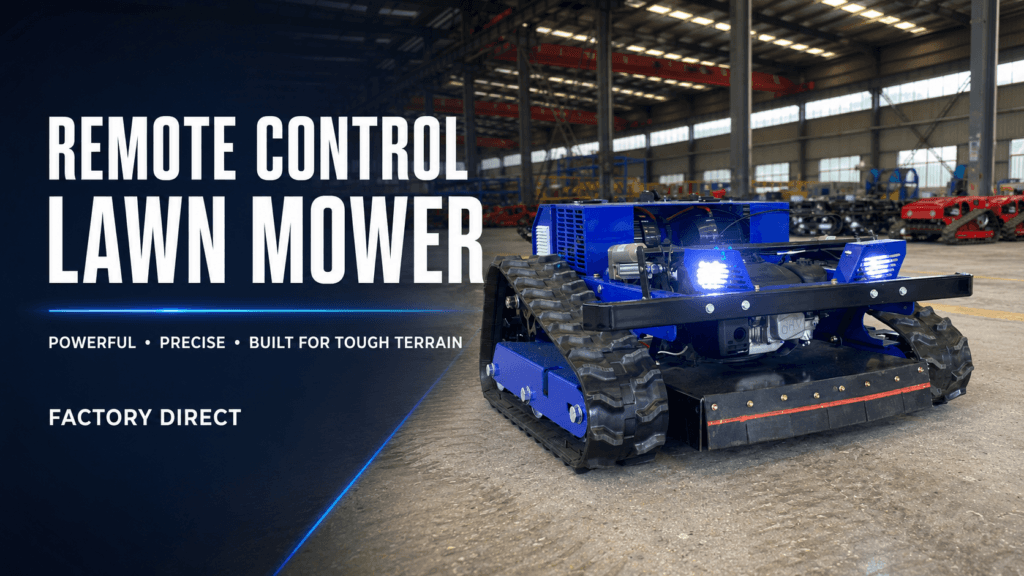
This guide explains how to compare zero turn mowers for acreage properties and where a remote control mower may be a better companion for difficult zones. YITAIWEI offers tracked, flail and wheeled remote control mower families, allowing professional buyers to separate open-lawn mowing from steep, rough or heavy-vegetation work.
Table of Contents
- What Makes a Zero Turn Mower Suitable?
- Key Specifications for Large Yards
- Compare Mower Types by Property Zone
- Terrain and Safety Limitations
- Productivity, Comfort and Maintenance
- How to Select the Right Machine
- Frequently Asked Questions (FAQ)
- Conclusion
What Makes a Zero Turn Mower Suitable?
A zero turn mower is designed around independent drive control for the two sides of the machine. This allows tight turns around trees, landscape beds, fence lines and other obstacles. On a large, open yard with regular turf maintenance, that maneuverability can reduce the amount of uncut grass left at the end of each pass.
For commercial property operators, the most important question is not simply whether a machine is powerful. It is whether the mower can follow the normal route without excessive overlap, transport delays, uncomfortable operating conditions or frequent interruptions. A suitable machine should fit the narrowest gate, reach the farthest zone, handle the expected grass height and receive service support in the buyer’s region.
Open Lawn Versus Mixed Acreage
Large yards are rarely uniform. One section may be smooth lawn, another may be a drainage ditch, orchard edge, wooded boundary or rough slope. A zero turn mower is generally easiest to evaluate for firm, relatively even and maintained ground. If a property includes several terrain types, divide the site into zones before choosing equipment.
Finish Mowing Is a Different Job
Regular turf mowing is different from reclaiming an overgrown field. A zero turn mower should be matched to the cutting height, grass density and debris conditions documented for the exact model. Tall weeds, woody stems, hidden wire and loose stones can require a different preparation process or cutting system.
Key Specifications for Large Yards
When comparing the best zero turn mowers for large yards, focus on specifications that change the daily workflow. The following table provides a practical screening framework for contractors, estates and rural property owners.
| Factor | Why it matters on a large yard | What to check |
|---|---|---|
| Cutting width | Wider decks can reduce passes across open areas | Gate width, storage, trailer and obstacle clearance |
| Turning layout | Tight turns can reduce trimming and overlap | Tree spacing, beds, posts and edge conditions |
| Cutting-height range | Controls the finish and helps match seasonal growth | Adjustment method and permitted vegetation height |
| Fuel or charging plan | Determines interruptions during a long workday | Refueling, charging access, runtime or operating guidance |
| Operator position | Influences visibility, comfort and exposure | Seat layout, controls, protection and slope limits |
| Service access | Reduces downtime over repeated mowing cycles | Parts availability, manuals and local support |
Cutting Width and Property Access
A wide deck can be productive in an unobstructed field, but it can become a limitation near gates, narrow passages and closely planted trees. Measure the actual access route, including the deck, tires and operator clearance. A narrower machine that reaches every zone may produce a better weekly result than a wider mower that needs additional hand work.
Power, Deck and Grass Conditions
Engine output should be considered together with deck design, blade configuration, discharge requirements and the height of the grass. Do not treat horsepower by itself as proof that a mower can clear brush or dense vegetation. For recurring tall and dense grass, YITAIWEI positions its flail remote control mower family for this type of vegetation-management discussion. The exact flail head and operating limits should be confirmed before ordering.
Operator Comfort for Long Sessions
Large properties create long operating sessions, so seat support, control layout, visibility and vibration matter. Ask how often the operator will leave the machine to trim, refuel, inspect or clear material. Comfort is a productivity factor because fatigue can affect attention and consistency late in the workday.
Compare Mower Types by Property Zone
The most efficient solution for a large yard may involve more than one mower category. Compare each machine against the zone it must maintain rather than asking one product to perform every task.
| Property zone | First category to evaluate | Reason for the starting point |
|---|---|---|
| Broad, maintained lawn | Zero turn mower | Efficient maneuvering and repeated finish mowing |
| Steep or uneven bank | Tracked remote control mower | Remote operation and a chassis intended for difficult terrain |
| Tall, dense grass | Remote control flail mower | Cutting-system choice is central to heavy vegetation |
| Firm, open access route | Wheeled remote control mower | Useful to evaluate where a wheeled layout fits the surface |
| Loose stones or rough ground | Tracked remote control mower | Track-based access can be considered, with debris inspection |
YITAIWEI’s tracked family is a relevant option to evaluate for steep, rough, uneven or loose-stone areas, while its wheeled family can be considered for firmer and more even ground. These categories should complement the zero turn mower when the property contains difficult sections, rather than being presented as interchangeable with every riding mower.
Why a Remote Mower May Help
A remote control mower allows the operator to control the machine from a separate position instead of riding across the work surface. This can be useful when a large property contains banks, rough transitions or areas where direct riding exposure is an important planning concern. The operator still needs visibility, training, an exclusion area and a clear stop procedure.
Remote Control Is Not Autonomous Mowing
A remote control mower requires an operator to send commands and observe the machine. It is not the same as a fully autonomous robot lawn mower that follows a programmed mowing system. This distinction matters when estimating labor, supervision, access and safety procedures.
Terrain and Safety Limitations
Large yards can appear simple from a distance while containing hidden holes, wet ground, drainage edges and changing grades. Review the complete route before selecting a zero turn mower. Follow the exact manufacturer’s instructions for slope, travel direction, attachments, stopping and weather conditions.
Slopes and Transitions
Zero turn steering can be valuable on flat or moderately sloped maintained turf, but it does not make a machine suitable for every hillside. Sharp transitions, wet grass and side slopes may change control behavior. When steep or rough terrain is a recurring part of the job, investigate a tracked remote control mower and request the exact operating limits for the proposed configuration.
Debris and Loose Stones
Inspect the mowing route for wire, branches, stones and other objects. Do not assume that any mower cuts or crushes stones. Stop after an unexpected impact, vibration or control change, and inspect the cutting system before continuing. This simple procedure is especially important on rural properties and construction-adjacent land.
Remote Range and Work Planning
Where remote operation is relevant, current YITAIWEI product information lists a remote-control range of up to 500m for the applicable lineup. The listed range is not a guaranteed safe working distance or an assurance of performance in every environment. Maintain direct visibility and follow the manufacturer’s operating guidance.
Actual performance may vary with terrain, vegetation, operating conditions and machine configuration. Confirm the final specification with the manufacturer before ordering.
Productivity, Comfort and Maintenance
Productivity on a large yard includes the entire work cycle: moving to the site, setting cutting height, mowing, turning, trimming, cleaning, refueling or charging, and servicing. A machine with a wide deck may still lose time if it cannot reach sections of the property or needs frequent manual recovery.
Plan the Mowing Route
Map open lawn separately from rough and restricted areas. Begin with the widest continuous zones, keep turns predictable, and leave narrow edges for a suitable finishing pass. Record recurring obstacles and wet areas so operators do not rediscover the same problems each week.
Maintenance Items to Compare
For a zero turn mower, inspect blades, deck, belts, spindles, tires, controls, fluids and protective structures according to the manufacturer’s schedule. For a remote control mower, also review tracks or wheels, drive components, controller, emergency stop, guards and accumulated vegetation. Ask the supplier for parts availability, service procedures and training materials before purchase.
Total Cost of Ownership
Purchase price is only one part of the decision. Include transport, fuel or electricity, routine service, blades or flails, belts, tires or tracks, operator time, storage and downtime. For a property with difficult zones, using a zero turn mower on open turf and a remote flail or tracked mower on specialized areas may be more economical than repeatedly forcing one machine into unsuitable work.
How to Select the Right Machine
- Measure the total mowing area and identify the largest uninterrupted lawn section.
- Measure gates, paths, storage space, trailer dimensions and the narrowest turning area.
- Record slope, wet ground, loose stones, holes, obstacles and tall-vegetation zones.
- Define whether the main task is finish mowing, heavy vegetation control or difficult-terrain access.
- Compare cutting width and height with the actual route, not only the advertised acreage.
- Evaluate operator comfort, direct exposure, visibility, controls and stop procedures.
- Request manuals, parts information, warranty terms and regional service contacts.
- Put the exact mower, deck or flail configuration and relevant specifications into the quotation.
For many large properties, the practical shortlist is a zero turn mower for maintained open lawn, a flail remote mower for tall and dense grass, and a tracked remote mower for steep or rough sections. YITAIWEI’s three solution families make that zoning approach available for professional buyers who need to match equipment to different parts of the same site.
Frequently Asked Questions (FAQ)
What size zero turn mower is best for a large yard?
The best size depends on open-area width, gate access, obstacles, storage and the required finish. Choose a wider deck only when the complete route can accommodate it without adding transport or trimming problems.
Are zero turn mowers good for large rural properties?
They can be productive on broad, maintained and relatively even lawn areas. Rural properties with steep banks, loose stones, dense weeds or rough ground may need a tracked or flail remote mower for separate zones.
Can a zero turn mower handle hills?
Some models can operate on limited slopes when the manufacturer permits the exact machine and conditions. Do not assume that zero turn steering makes steep, wet or uneven terrain safe. Review the manual and assess the complete route.
What is better for tall grass, a zero turn or flail mower?
A zero turn mower is commonly evaluated for regularly maintained turf, while a flail cutting system is the relevant category to investigate for recurring tall and dense grass. Confirm vegetation limits and the exact attachment before use.
Should I choose a zero turn mower or a remote control mower?
Choose according to the property zones. A zero turn mower may suit open maintained lawn; a remote control tracked mower may be more appropriate to evaluate for steep or rough areas; and a remote flail mower may fit dense vegetation.
Conclusion
The best zero turn mowers for large yards combine the right deck size, maneuverability, access, comfort and service plan for the property you actually maintain. Use a zero turn mower where broad, maintained turf is the main task, and consider YITAIWEI tracked, flail or wheeled remote control mower solutions for specialized terrain and vegetation zones. A measured site plan and an exact configuration review will produce a more reliable purchase decision than acreage claims alone.