
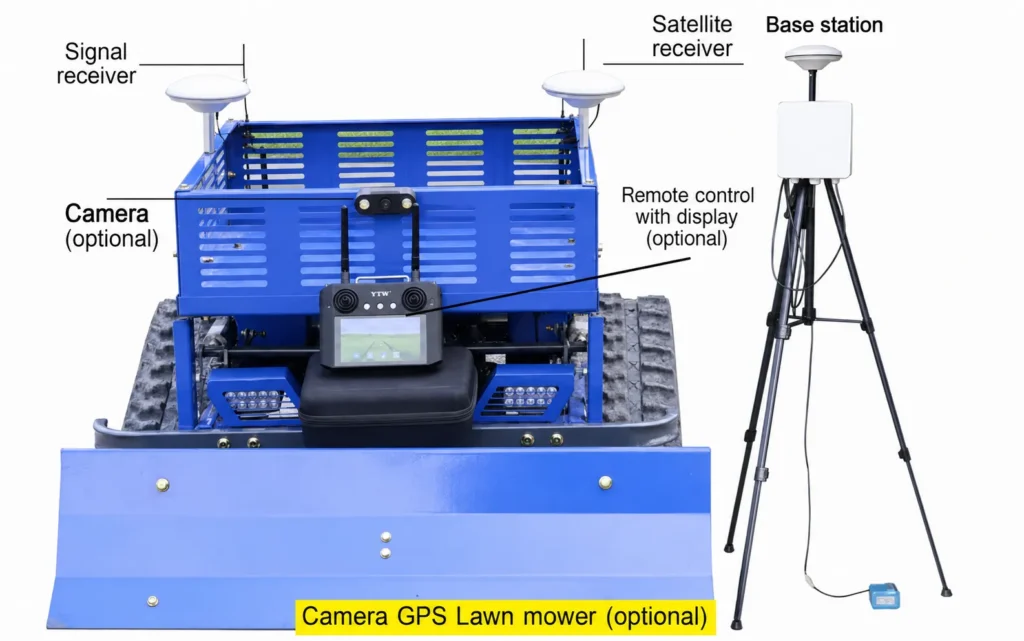
Remote control lawn mower common problems usually involve the controller, signal, cutting deck, drive system, engine, or routine maintenance. For contractors, municipalities, land-maintenance companies, and commercial property operators, the fastest solution is to identify the symptom first, make the machine safe, then check the relevant system against the model manual. This guide covers live operator-controlled remote mowers, not fully autonomous robot lawn mowers.
Quick answer: The most frequent issues are failure to start, intermittent remote response, uneven cutting, engine stalling, overheating, excessive vibration, poor traction, and grass or debris buildup. Do not bypass an emergency stop, guard, interlock, or other safety control to keep working.
Remote Control Lawn Mower Common Problems and First Checks
1. The mower or remote control will not start
Begin with the simplest checks: confirm that the controller battery and machine power source are charged or supplied correctly, the emergency stop is released as specified, and the transmitter is paired with the mower. On gasoline models, check the fuel and starting controls listed in the manual. On electric or mixed systems, inspect visible connectors, fuses, and battery terminals without opening components that require qualified service.
A mower may also refuse to start because a required start condition has not been met. The controller may be out of range, a blade command may be active, or a safety interlock may detect an incorrect control position. Never bridge an interlock. If the machine still will not start after the manual’s basic checks, stop troubleshooting and contact the dealer or service provider.
2. The remote signal drops or the mower responds slowly
Signal loss can result from a low controller battery, damaged antenna, radio interference, obstructions, excessive distance, or poor line of sight. Move to a clear observation position and check whether the problem changes. Inspect the controller and receiver for impact, moisture, loose connections, or visible damage.
Do not treat a brochure range as a guaranteed working distance. The HSE’s guidance on mobile work equipment explains that remotely controlled self-propelled equipment should have a safe automatic stopping response when it leaves its control range. Your mower’s actual response, restart procedure, and emergency-stop behavior must come from its own manual. A model-specific example is documented in this remote-mower operation manual.
3. The mower leaves strips or cuts unevenly
Uneven cutting commonly points to a damaged, dull, loose, or obstructed blade system, an incorrectly set cutting height, inconsistent travel speed, or ground that changes height quickly. First isolate the machine according to the manual, then inspect the deck and cutting components. Remove packed vegetation only after all relevant movement and cutting energy has been shut down.
Also check whether the selected cutting height matches the vegetation. A narrow height range may be unsuitable for tall growth, while a high setting may leave a rough finish. If the deck is clean and the blades are sound, look for a mechanical alignment problem or a drive-control issue rather than repeatedly lowering the height.
4. The engine stalls or power falls during mowing
Stalling may occur when vegetation is too dense for the current travel speed, the deck is clogged, the engine is not receiving the required fuel or air, or the cooling system is restricted. Reduce load through the operating procedure in the manual and inspect for visible blockage. Do not assume that a published horsepower figure predicts performance in every vegetation type.
For gasoline machines, use only the fuel, oil, and service procedure specified for the exact engine. For electric systems, check the model’s battery and voltage instructions rather than estimating runtime from a voltage or capacity label. Persistent power loss, smoke, unusual exhaust, or repeated stalling requires service.
5. The mower vibrates, rattles, or becomes unusually noisy
Stop work when vibration changes suddenly. Likely causes include a bent or damaged blade, material wrapped around a shaft, loose fasteners, damaged bearings, or an unbalanced cutting component. Continuing to operate can increase damage and make the machine harder to control.
After isolation, compare the machine with the manual’s inspection points. Do not straighten or weld a cutting component unless the manufacturer specifically permits that repair. If vibration remains after visible debris is removed, have the deck, shaft, blade carrier, and mounting hardware inspected by qualified personnel.
6. The mower slips, turns poorly, or does not travel straight
Poor movement can be caused by unsuitable ground conditions, debris around wheels or tracks, low or uneven tire pressure where applicable, incorrect track tension where applicable, drive damage, or a control setting problem. Check the site before blaming the machine: loose soil, wet grass, ruts, side slopes, and hidden obstacles can all change traction.
Remote operation does not remove the need for a safe operator position. Keep the machine visible, maintain a clear route, and remain outside potential travel, slide, rollover, and discharge paths. If steering is delayed, one side loses drive, or the mower moves after a stop command, isolate it and remove it from service until the fault is resolved.
7. Grass blocks the deck or the machine overheats
Wet or heavy vegetation can pack around the cutting mechanism, while grass and dust can restrict cooling areas. The University of Minnesota Extension advises clearing debris before mowing, retaining safety devices, and delaying mowing when conditions are wet. These general practices should be adapted to the exact remote mower and its manual.
Do not use a pressure washer on electrical components unless the manufacturer expressly allows it. Clean the deck, cooling screens, and accessible surfaces with the approved method, then inspect for damaged guards, belts, cables, and connectors. Repeated overheating is a maintenance fault, not a reason to continue at a slower speed indefinitely.
Use a Symptom-Based Troubleshooting Process
A consistent process helps a professional crew avoid replacing expensive parts unnecessarily:
- Stop and secure the machine. Release the controls, use the emergency stop as directed, and keep people away from the work area.
- Record the symptom. Note whether the issue occurs at startup, only under load, after warming up, on a slope, or when the controller is farther away.
- Check external causes. Inspect batteries, fuel, visible wiring, antennas, debris, blades, guards, fasteners, and the immediate terrain.
- Consult the exact manual. Confirm the model’s start sequence, signal-loss response, fluid specifications, service intervals, and isolation procedure.
- Escalate safety-related faults. Failed emergency stops, unexpected movement, damaged cutting parts, severe vibration, exposed wiring, leaks, or repeated overheating require qualified inspection.
OSHA’s riding-mower guidance is not written specifically for remote-controlled machines, but its emphasis on terrain surveys, equipment inspection, operator training, and hazardous edges is relevant when planning commercial mowing work. The guidance is available through OSHA’s mower hazard resource.
Compare Published Parameters Before Ordering
Specifications can help a buyer identify configuration differences, but they should not be converted into promises about safe slope operation, output, or suitability for a particular property. The supplied Yitaiwei parameter tables list the following values for six YTW models:
| Model | Mowing width | Cutting height | RC range | Max gradient | Travel speed |
|---|---|---|---|---|---|
| YTW-550L-B | 550mm | 1-20cm | 500m | 50° | 0-4km/h |
| YTW-550S-Z | 550mm | 30-70mm | 500m | 60° | 0-5km/h |
| YTW-800L | 800mm | 20-100mm | 500m | 45° | 5km/h |
| YTW-800T | 800mm | 100-200mm, electric adjustment | 500m | 60° | 0-6km/h |
| YTW-900T | 900mm | 20-200mm, adjustable | 500m | 60° | 0-6km/h, adjustable |
| YTW-1000T | 1000mm | 100-200mm, electric adjustment | 500m | 60° | 0-6km/h |
The table’s RC range is stated in meters, not millimeters. The listed max gradient is a published parameter, not a guaranteed safe working slope. Confirm the operating method, surface limits, direction of travel, weather restrictions, emergency behavior, and attachment limitations for the exact model before deployment. Actual performance may vary with terrain, vegetation, operating conditions and machine configuration. Confirm the final specification with the manufacturer before ordering.
Also examine wording carefully. For example, the YTW-900T table says Remote start, which should not automatically be rewritten as full remote control of every machine function. Configuration ranges such as 7.5/9HP or 22/25/27HP also need model-specific confirmation before they are used in a purchase specification.
Prevent Problems With a Routine Checklist
Before each shift
- Inspect the controller, machine power source, visible wiring, receiver, antenna, emergency stop, and control switches.
- Check the deck, blades, guards, fasteners, wheels or tracks, leaks, and obvious signs of impact.
- Survey the route for rocks, wire, branches, people, animals, drop-offs, water, soft ground, and other hazards.
- Confirm the operator can see the mower and has a clear retreat route.
- Follow the manual’s approved functional checks before entering production work.
After each job
- Remove grass and dirt using the approved cleaning method.
- Inspect blades and the deck for damage, wrapping, looseness, and abnormal wear.
- Check the controller and machine batteries according to the storage and charging instructions.
- Record unusual vibration, signal loss, overheating, starting difficulty, or steering changes.
- Schedule operating-hour maintenance instead of relying only on calendar reminders.
General machinery guidance from the HSE recommends that equipment be inspected, maintained, and isolated before blockages, cleaning, adjustment, or repair. Read the HSE mobile work equipment guidance alongside the instructions supplied with the exact mower.
Frequently Asked Questions (FAQ)
What are the most common remote control lawn mower problems?
The most common issues are failure to start, signal loss, uneven cutting, stalling, overheating, excessive vibration, poor traction, and deck blockage. Start with external checks and the exact manual. Treat unexpected movement, failed safety controls, damaged blades, and severe vibration as stop-work conditions requiring qualified inspection.
Why does a remote control lawn mower lose signal?
Common causes include a low controller battery, damaged antenna, obstruction, radio interference, excessive distance, or a receiver or wiring fault. Keep the mower visible and within the manufacturer-defined operating area. Do not assume that the published RC range is a safe operating limit or that every model handles signal loss identically.
Can remote control lawn mowers cut wet grass?
Wet grass can reduce traction and cause clippings to pack into the deck or cooling areas. Whether work is permitted depends on the machine, terrain, vegetation, and manufacturer instructions. Inspect conditions before starting and postpone mowing when wet ground creates poor control, excessive clogging, or an unsafe operator position.
Why does my remote control mower leave uncut strips?
Check for damaged or dull blades, an obstructed deck, an incorrect cutting-height setting, inconsistent travel speed, or a deck that is not tracking the ground correctly. If the cutting system looks sound, inspect alignment and drive behavior. Do not continue operating if the mower vibrates or a blade component is damaged.
What should I do when a remote control lawn mower stops responding?
Use the emergency-stop procedure specified for the model, keep people away, and observe the machine from a safe position. Do not approach until movement and cutting functions are confirmed to be stopped and the manual’s isolation procedure has been followed. Check the controller battery and signal conditions only after the machine is secure.
For professional buyers, the best way to reduce remote control lawn mower problems is to match the machine’s verified configuration to the worksite, train operators on the exact controls, and keep a documented inspection and service routine. A careful pre-job survey and prompt response to abnormal behavior will usually prevent a small fault from becoming a costly equipment or downtime problem.